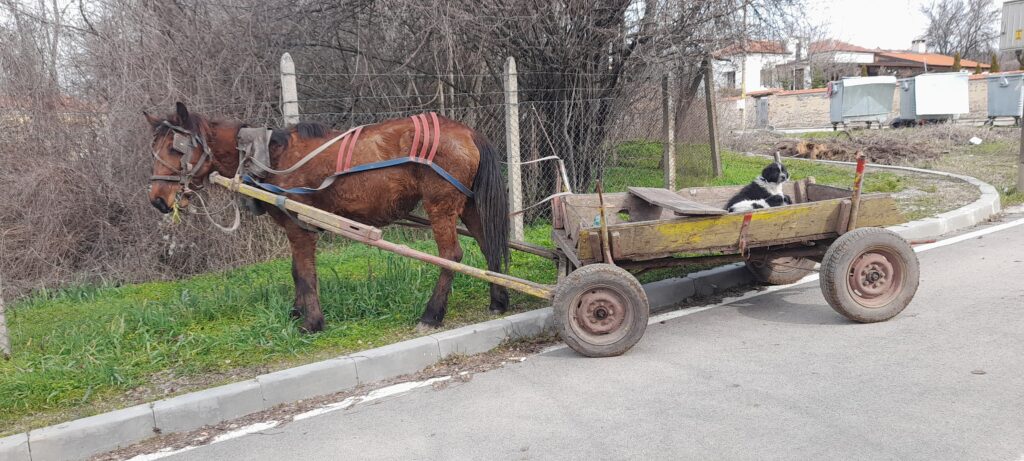
Today offered one of those travel moments that lingers long after the dust settles.
In the small village of Sredno Gradishte, I noticed two young boys rummaging through a dumpster — a reminder that rural life isn’t always postcard-perfect. Not long after, their father appeared in a horse and cart, rolling in as if from another century. It was such a striking sight that I asked to photograph the cart. He smiled and agreed.
Within moments, the boys were asking for money and food.
I’ll admit, I felt uneasy. As a solo traveller, instinct speaks loudly — especially when no one else is around. I chose not to open my purse. Not out of indifference, but because sometimes compassion has to sit alongside common sense.
The moment nudged me to learn more. The Romani people (Gypsies) in this region are part of the wider Roma population across Bulgaria, which has one of the largest Roma communities in Europe. Around 60 km from here lies Plovdiv, home to one of the biggest Gypsy Ghettos in the country — and the Balkans — with approx 60,000 residents.
Like many minority groups across Europe, they face significant challenges, including poverty and discrimination. Yet their culture is rich with strong family bonds, music, language and resilience that has endured for generations.
That brief encounter — a horse and cart, two cheeky boys, and my own inner dialogue — reminded me that travel isn’t just about scenery. It’s about people. Sometimes the moments are joyful. Sometimes confronting. Always human. And sometimes… they arrive by horse and buggy.