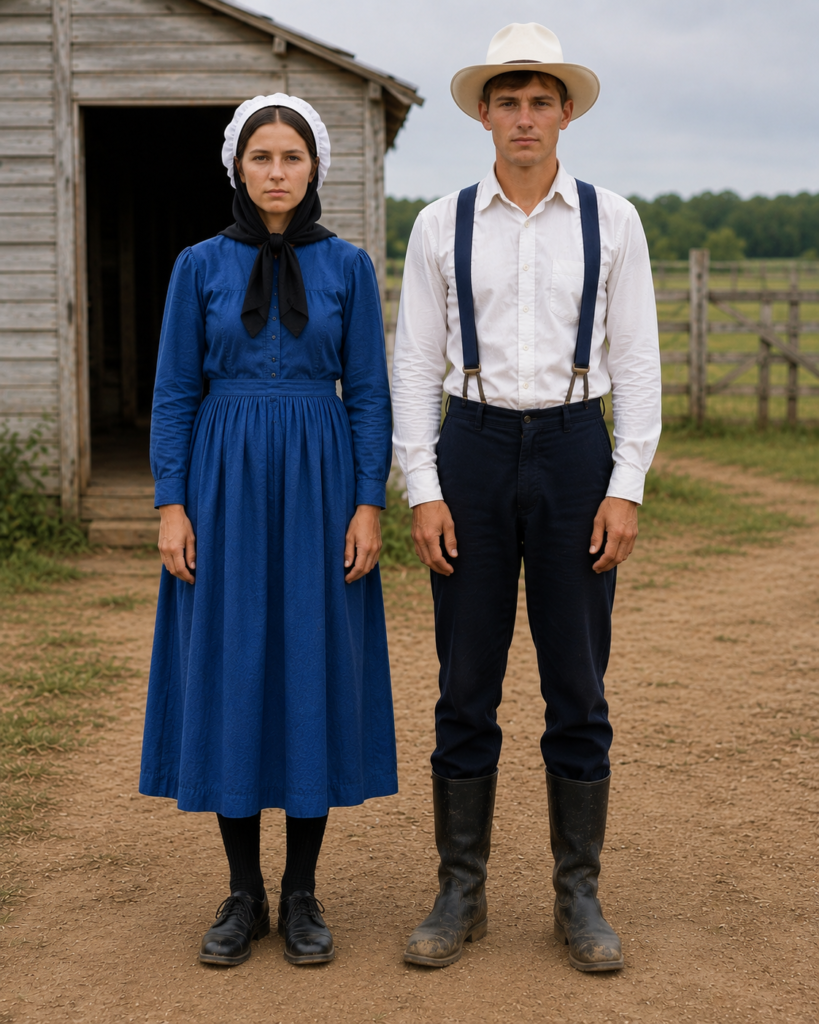
The traditional Mennonite way of life was built around a simple but extraordinarily powerful principle: the community came before the individual.
Faith wasn’t confined to Sunday worship. It governed how you dressed, who you married, how you raised your children, what you learned, what technology you used, how you behaved and even who you could associate with.
From childhood, children were taught the beliefs, rules and expectations of the community. Modesty, obedience, humility and conformity were valued; individuality, pride and outside influences were viewed with suspicion.
Clothing was deliberately plain. Women wore long dresses and head coverings, men dressed simply, and fashion and personal adornment were discouraged. Education was designed largely to prepare children for their place within the community. Marriage within the faith was strongly encouraged because the survival of the community depended upon the next generation continuing the same way of life.
Even technology could be restricted if it was considered likely to bring the outside world into the community.
And then there was church discipline.
Breaking the rules could lead to correction, excommunication and, in the strictest communities, avoidance or shunning. Because the church was also your family, friends, social circle and support network, leaving could mean losing almost everything you knew.
There was, however, another side to this strictness. These communities could be extraordinarily supportive. Neighbours helped neighbours, families cared for one another and those with more were expected to help those with less. Pacifism, mutual aid, self-sufficiency and community responsibility were deeply valued.
But there was a price for such unity.
When every aspect of life is determined by the community — what you wear, what you learn, who you marry, what you believe, where you go and who you associate with — where does the individual end and the community begin?
Perhaps it is too simplistic to call it mind manipulation. These beliefs were genuinely held and were passed down through generations as a way of protecting faith and community.
But there is no denying that shaping a person’s entire world from childhood can leave very little room for independent thought, personal choice or individuality.
The strength of the system was that nobody was expected to stand alone.
Its potential weakness was that nobody was really free to stand apart.
That, to me, is one of the most important things to understand when looking at the strict traditional Mennonite culture. It wasn’t simply about bonnets, farming and old-fashioned customs. It was an entire system designed to preserve a community — even when preserving the community meant putting the individual second.